Mammals
Abi - 10 centaurus

(British Shorthair)
Mammals are warm-blooded
vertebrate animals of a class that is distinguished by the possession of hair
or fur, the secretion of milk by females for the nourishment of the young, and
(typically) the birth of live young. Mammals have several unique
characteristics that differentiate them from other animals. Most mammals have
hair, or fur, covering their body. They are also capable of regulating their
body temperature. The mammal’s metabolism controls heat production, and the
sweat glands help cool the body. These allow the mammal to maintain a constant
body temperature, regardless of the environmental temperature. One other
difference is that mammals give birth to fully formed babies, and the female
mammals produce milk to feed their young.
Most mammals
walk on 4 legs, with only the humans walking upright on 2 legs. Aquatic mammals
have flippers, or fins, for swimming rather than legs. Common mammals include:
primates, such humans and monkeys; marsupials; rodents; whales; dolphins; and,
seals.
Traits
-
Are vertebrates (which mean
they have a backbone or spine).
- Are endothermic. Also known as
“warm-blooded,” endothermic animals regulate their own body temperate which
allows them to live in almost every climate on Earth.
-
Have hair on their bodies.
-
Produce milk to feed their
babies.
Anatomy
-
The majority of mammals have
seven cervical vertebrae (bones in the neck), including bats, giraffes, whales,
and humans. The exceptions are the manatee and the two-toed sloth, which have
only six cervical vertebrae, and the three-toed sloth with nine cervical
vertebrae.
-
All mammalian brains possess a
neocortex, a brain region unique to mammals. Placental mammals have a corpus
callosum, unlike monotremes and marsupials. The size and number of cortical
areas (Brodmann's areas) is least in monotremes (about 8-10) and most in
placentals (up to 50).
-
Most mammals are viviparous,
giving birth to live young. However, the five species of monotreme, the
platypuses and the echidnas, lay eggs. The monotremes have a sex determination
system different from that of most other mammals. In particular, the sex
chromosomes of a platypus are more like those of a chicken than those of a
therian mammal. The mammary glands of mammals are specialized to produce milk,
a liquid used by newborns as their primary source of nutrition. The monotremes
branched early from other mammals and do not have the nipples seen in most
mammals, but they do have mammary glands. The young lick the milk from a
mammary patch on the mother's belly.
-
Mammals evolved from
four-legged ancestors. They use their limbs to walk, climb, swim, or fly. Some
land mammals have toes that produce claws for climbing or hooves for running.
Aquatic mammals like whales and dolphins have flippers which evolved from legs.
-
In intelligent mammals, such as
primates, the cerebrum is larger relative to the rest of the brain. Intelligence
itself is not easy to define, but indications of intelligence include the
ability to learn, matched with behavioral flexibility.
-
To maintain a high constant
body temperature is energy expensive – mammals therefore need a nutritious and
plentiful diet. While the earliest mammals were probably predators, different
species have since adapted to meet their dietary requirements in a variety of
ways. Some eat other animals – this is a carnivorous diet (and includes
insectivorous diets). Other mammals, called herbivores, eat plants. A
herbivorous diet includes subtypes such as fruit-eating and grass-eating. An
omnivore eats both prey and plants.
Species
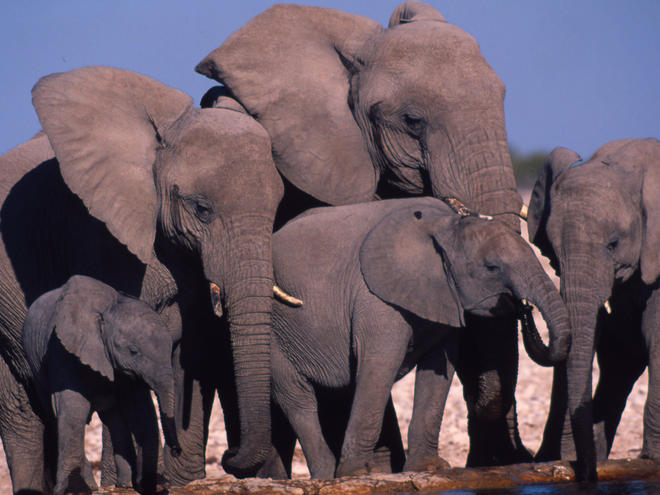
African Elephants: Intelligent large mammals that usually travels in group and protecting their young from harm.

Species
African Elephants: Intelligent large mammals that usually travels in group and protecting their young from harm.

0 comments:
Post a Comment